
A garden room does not need walls. The most useful outdoor living spaces in Britain are simply corners of a garden that have been thought about properly — somewhere you can carry a mug of tea to in April drizzle and still want to sit in when the clocks go back.
The trick is to design for the weather we actually get, rather than the weather we hope for. Wind, rain and a low sun matter as much as the furniture you choose. Get those basics right and the space will earn its keep for eight or nine months of the year, and on crisp winter afternoons too.
Before you buy anything, watch the space for a week. Where does the sun land at six in the evening in June? Where is it at four in the afternoon in October? Which corner catches the prevailing wind, and which one stays still and warm long after the rest of the garden has cooled?
Then think about the job the space has to do. A place for morning coffee needs early sun and a small table. Somewhere to work outdoors needs shade, a socket and a surface at the right height. Evening entertaining needs light you can dim and a heater you can reach without getting up. These are different rooms, even if they occupy the same paving.
Keep the main seating zone close to the house — a few metres from a back door, ideally — so setting it up takes seconds rather than a packing exercise. A second, smaller spot further down the garden, perhaps a bench under a tree, gives you somewhere to sit while the kettle boils.
An outdoor room feels intentional when its edges are defined. You can do that with a change of level, a different paving material, a deck edge, a low wall, or simply a large all-weather rug. Planting does the rest: low mounds of lavender or hebe along one side act as a soft wall, while a taller shrub or small multi-stem tree gives privacy without shutting out light.
A workable footprint for most gardens is around three and a half metres square. That is enough for four chairs, a low table and a walkway behind them. Squeeze the seating too tight and nobody will use it, however good it looks from the kitchen window.
The best test is an honest one: sit in a chair for an hour with a book. If your back aches or your arms have nowhere to rest a plate, it is the wrong chair. Look for seats roughly 43–45cm high, with a slight recline and arms wide enough to balance a mug on.
Metal frames look sharp but get uncomfortably cold in spring. Timber weathers gracefully but needs oiling. Powder-coated aluminium and woven resin are the sensible middle ground in a wet climate. Whatever you choose, buy a waterproof storage box and put it within arm's reach of the seating — cushions that live in a shed at the bottom of the garden will never be used.
You do not need to cover the whole space. Protecting one seating zone changes everything.
Wind, in most British gardens, is the bigger nuisance. A solid screen on the prevailing side, even a slatted one that lets some air through, feels warmer than a roof overhead. If you are adding any structure with a roof, check with your local authority about permitted development and building regulations before you commit — rules tighten near boundaries and in front of the house, and it is worth taking professional advice if you are unsure.
One string of fairy lights is not a lighting scheme. Build it in layers instead.
Stick to warm white, around 2700K. Cool white bulbs make a garden look like a car park. Choose fittings rated IP44 or higher for general outdoor use, and put everything on a timer or smart plug so the space is lit when you step outside rather than when you remember.
A fire pit or chiminea extends the season by weeks, and the flicker does more for the atmosphere than any heater. Site it on a non-combustible surface, keep it well clear of planting, fences and anything overhead, and never burn treated or painted timber.
For instant warmth, infrared heaters are more effective outdoors than the glowing patio heaters, because they warm people rather than the air. Any gas appliance should be installed and checked by a Gas Safe registered engineer. Never use a fire pit, chiminea or barbecue in an enclosed or fully covered space — the carbon monoxide risk is real. A basket of washable blankets by the door costs little and gets used constantly.
Porcelain paving, composite decking and hardwood such as teak, iroko or accoya all handle British winters well. Use stainless steel fixings rather than ordinary screws, which stain timber and fail early. For cushions, look for solution-dyed acrylic covers that resist fading and mildew, and store them dry rather than damp.
Lift timber furniture legs onto small feet or blocks over winter so air can move underneath, and give decking a brush and a rinse in spring. Ten minutes of maintenance twice a year is the difference between a space that lasts fifteen years and one that looks tired in three.
The outdoor rooms that get used are the ones with the fewest obstacles. Keep a covered box for cushions, a basket for blankets, and a hook for a lantern near the door. Put the lights on a timer. Sweep the paving when you sweep the kitchen floor.
If stepping outside involves unlocking a shed, unstacking chairs and fetching a torch, you will not do it on a Tuesday in September. If it takes thirty seconds, you will. Build the space around that thirty seconds and the rest — the planting, the furniture, the finishing touches — can evolve over a few seasons.
Photo: 1139623 / Pixabay
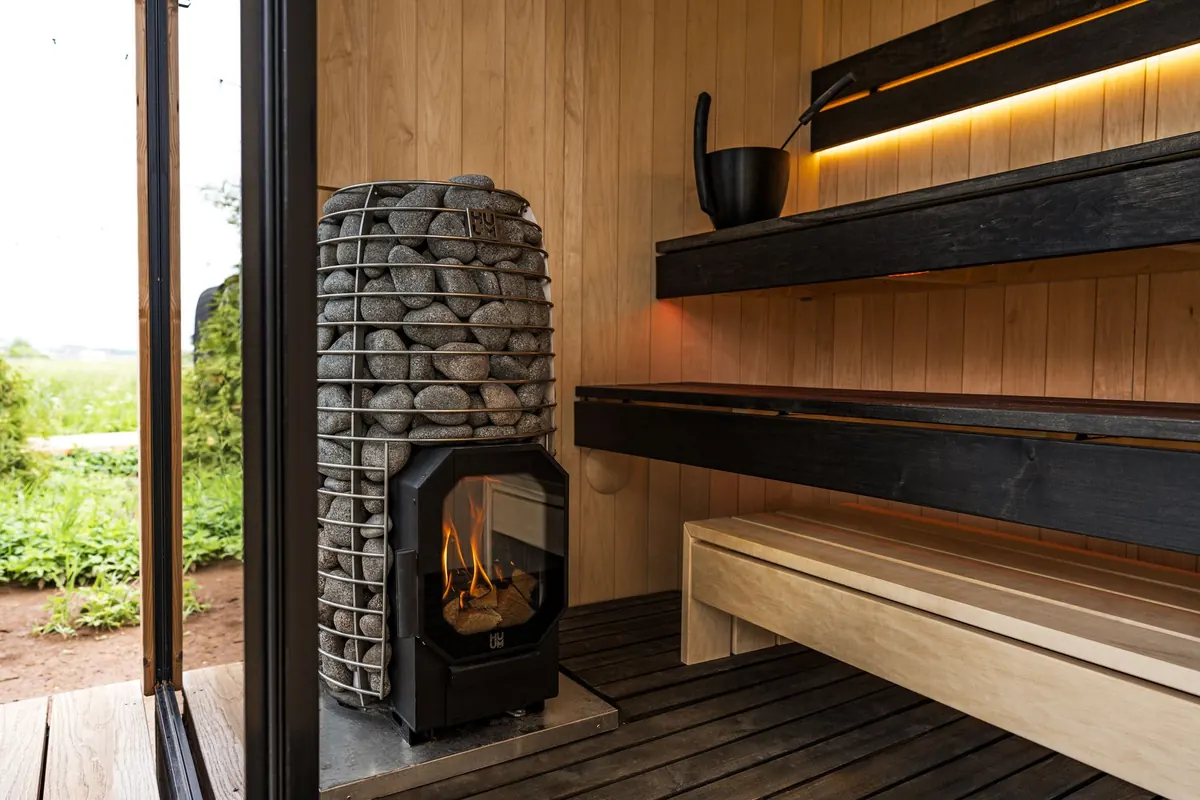
How electric, infrared, wood burner and other garden room heaters compare on running costs, installation and...

Cold surfaces, trapped moisture and poor airflow make sheds sweat. Here is how to find the cause, stop the drips and...

Ten practical, affordable ways to make a garden shed harder to break into, from better locks and hinge bolts to...

Cosy wooden garden rooms and outdoor retreats.
